
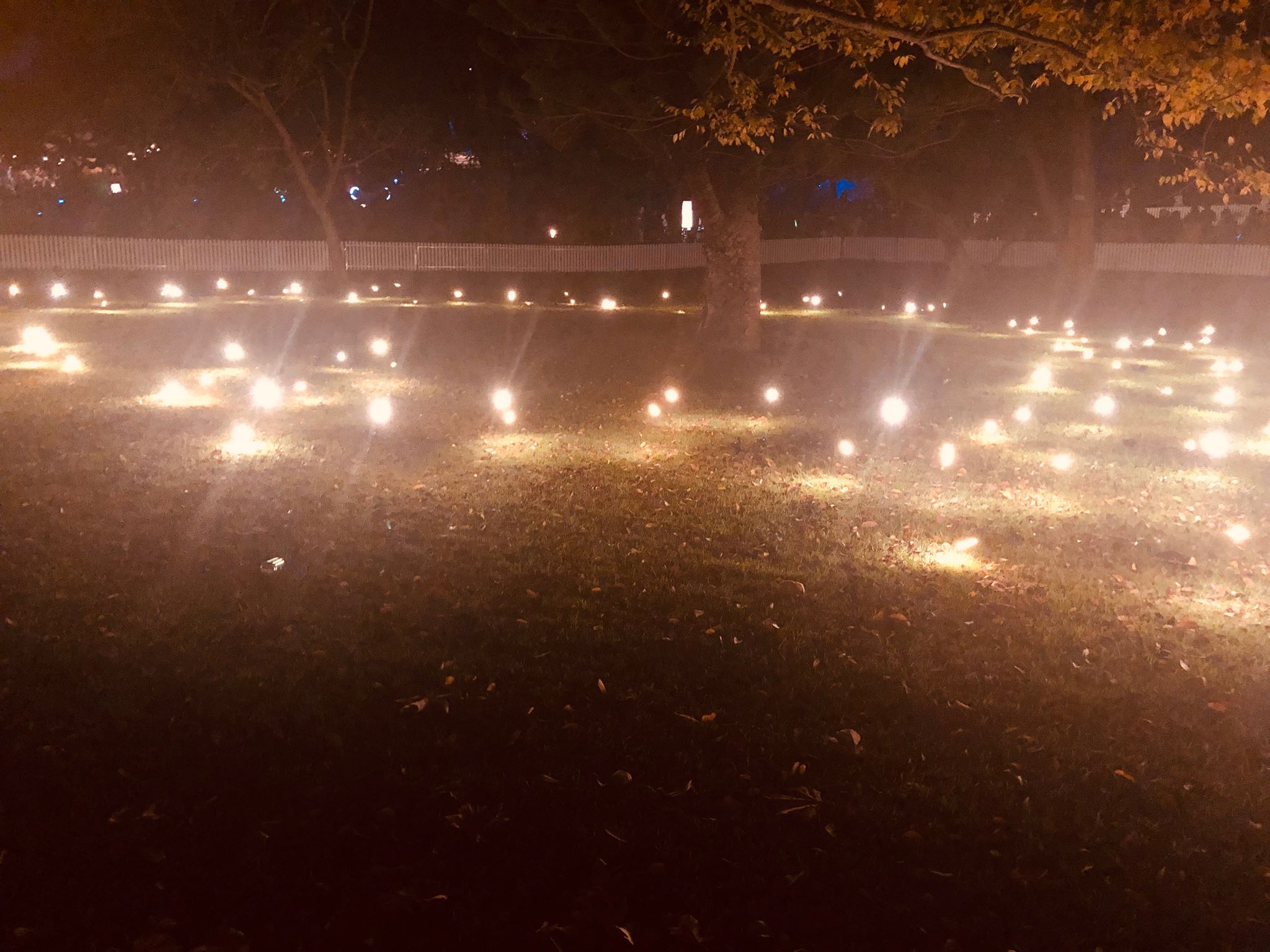
150 years later: 2019, Vivid Light Festival – The Royal Botanic Gardens. I felt there was a magic in this photograph, the same magic that was woven into ‘Bell-birds’ a century and a half ago…
Blog 1 – Question: Which poem or story that we have looked at so far made an impression on you? What was the impression it made? Why did it touch your feelings and imagination?
Henry Kendall’s “Bell-birds” leaves my imagination adrift in a quiet, peaceful greenspace. In a world frazzled by the fastidious tick and buzz of the technological era, there permeates a sibilant magic and salient musicality throughout Kendall’s poem that resonates with my own love for the natural realm. The melodic use of rhyme and alliteration throughout the poem compels my imagination to walk with Henry Kendall through a land “Where dripping rocks gleam and the leafy pools glisten”. Kendall kindles within me a sense of deep respect and admiration for the vast, rare terrain that is the Australian landscape.

I especially felt a likeness to the last lines of the last stanza: “So I might keep in the city and alleys, the beauty and strength of the deep mountain valleys.” There is a contrast and similarity between “alleys” and “valleys”, as I initially perceived a shared imagery in the shade and darkness of both locations. In “alleys”, the implication of sinisterness prowling the city is evoked, yet I feel that “mountain valleys” are comparably cavernous and sacred, holding within “cool wildernesses”.

What left the keenest impression on me, however, was my notion that the choice of the native bellbird for Kendall’s poem was a deliberate metaphor for Australia itself. Through a bird with the appearance of grey drabness, Kendall embodies the “heart-beats of passion” that course through the Australian heartland. Historically, both Australia’s bushland and mountain ranges were perceived as an obscure, looming, unimpressive form that manifested itself as an extremely unattractive alternative to the temperate quaintness of England. The mediocre bellbird can be perceived equally as unattractive as the motherland through which it roams. However, when we hear the bellbird’s tuneful tolling, the revelation of this animal’s profound beauty is the metaphor in this poem. Kendall is professing to actively recognise the harmonious charm of Australia, for to listen to the dull bellbird’s beautiful songs is to understand the exquisite complexity of the Australian landscape. Thusly, I feel we can comprehend and perhaps even mourn the loss of the “sights and sounds of the wildwood”.
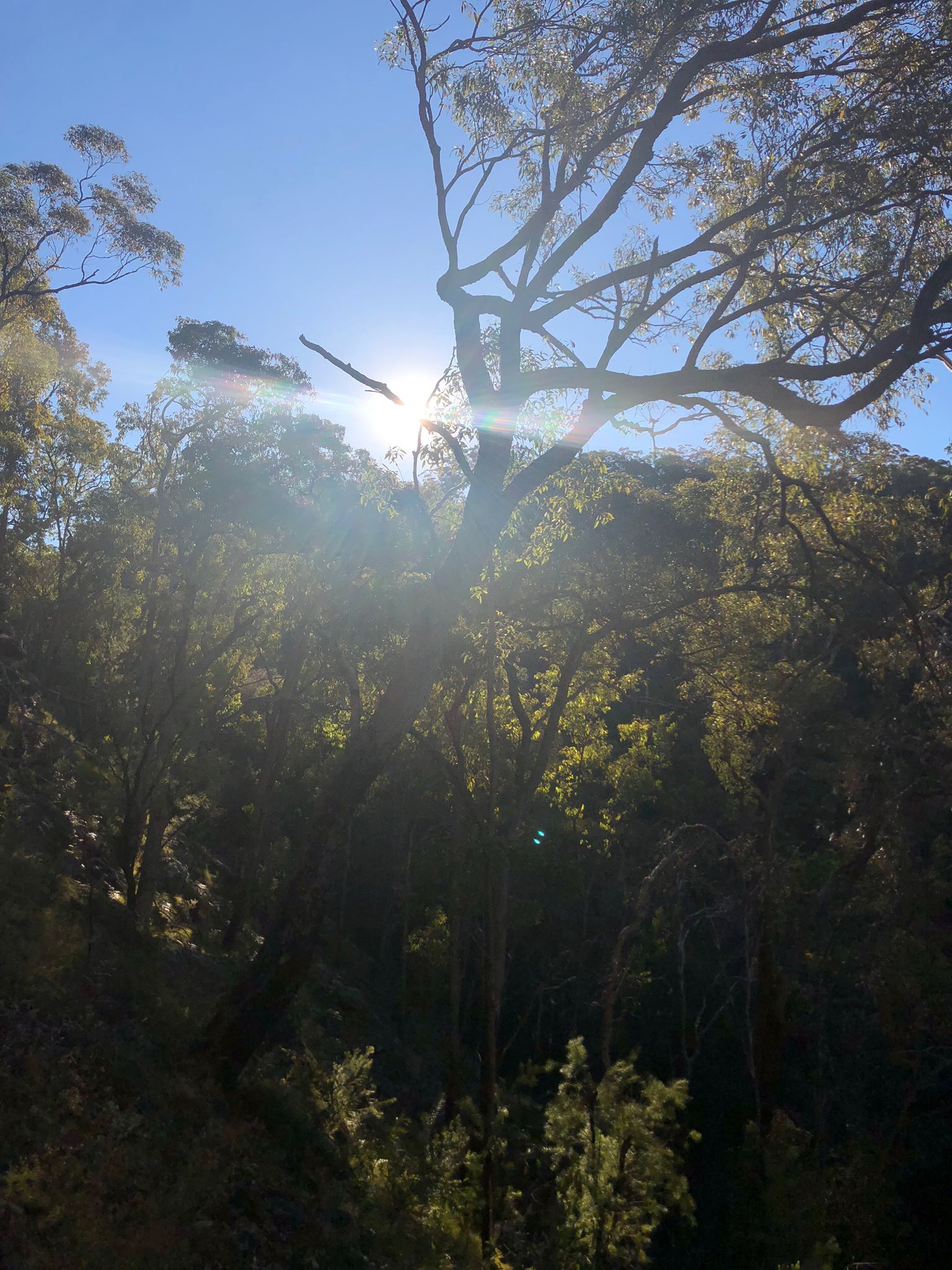
“Bell-birds” is a lulling poem, both lullaby and siren-song to the senses of suburban students such as myself, who I believe often yearn for the trilling call of nature to satiate a strange void we feel in the name of living ‘city folk’ lives. It is this very call–this reminiscent, yet ravishing song–of the bellbird that Kendall describes which touches the “softer than slumber” part of my soul.
 Mariama E. Biro Saibou
Hi Mariama,
Your critical blog entry based on your impression of Henry Kendall’s “Bell-Birds” was both insightful and memorable. Your use of imagery and descriptive language allowed me to appreciate and admire the Australian landscape and all that is within it.
I thought the images you incorporated complemented your analysis very well. It was interesting how you used them to draw connections to your own personal experiences, in particular, how you showed the continuity of the bellbird through your image of ‘Elizabeth lookout’.
I particularly found it interesting how you referred to the author choosing the bellbird as a metaphor and how you did this through conveying that to recognise the “harmonious charm of Australia” you must listen to the “Bellbirds beautiful songs”. I agree with this as we can only appreciate the beauty of something when we fully immerse ourselves in each experience.
Overall, your blog was very well structured and nicely presented, great job!
LikeLike