
ENGL202 Blog 5 – Creative: Language’s Liberation and Enslavement
TASK: Write a poem or a short prose passage that illustrates the ways in which language can be both a prison and a release from prison.
Exile in English…
Words will be cruel. Cold and clean and quiet as they confirm your illness after months of blood tests and bone density scans. Words will be awfully kind. ‘I do,’ she whispers with tears shiny as the diamond on her pale, manicured hand.
Words will wind around you–a trickster crawling up your sibilant spine–a bilingual zephyr to seal your oaths and read your palms. The words of her or him or them or you…oh, words will play hopscotch with your hope and are the cement and soul in your thoughts. These letters–these hieroglyphs–these keys to the kingdom.
These syllables–this syllabus–these syntactic prison sentences.
I remember my father’s ancient language; it was fast and harsh and loud. Truly musical, it sent me to sleep at night. A sad discussion with a village on the other side of the other world was my white noise machine.
Hausa is what they called it. “Sunana…English?” My name is: English.
Do you speak English?
Now I am small, I see the language in my mind: it bears a shape and a voice and a smell. The light of the garage is on, and the cup of tea is steaming, and my father’s realm is teeming with rasping gibberish. He sounds as if he is casting spells, he circles the worktable like chanting ’round the bad juju magic cauldron. Never have I ever felt so helpless and so fascinated. It is a secret power I have no access to. It is the cotton candy grass on the other side the fence. How their mouths move with the crackle of lightening…with whispered, misty promises.
And I remember knowing I was in exile inside these words of my own, for I had no notion of the cosmos my father spoke to back home.
Works Cited
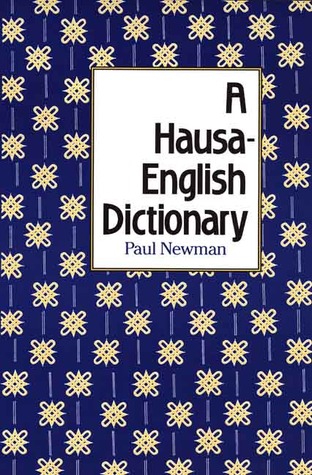
Malami Buba. “Paul Newman: A Hausa–English Dictionary.” Lexikos 18 (2011): Lexikos, 01 October 2011, Vol.18. Web.
ENGL202 Blog 1 – Creative: “Dance at le Moulin de la Galette” by Pierre-Auguste Renoir (Ekphrastic Poem)
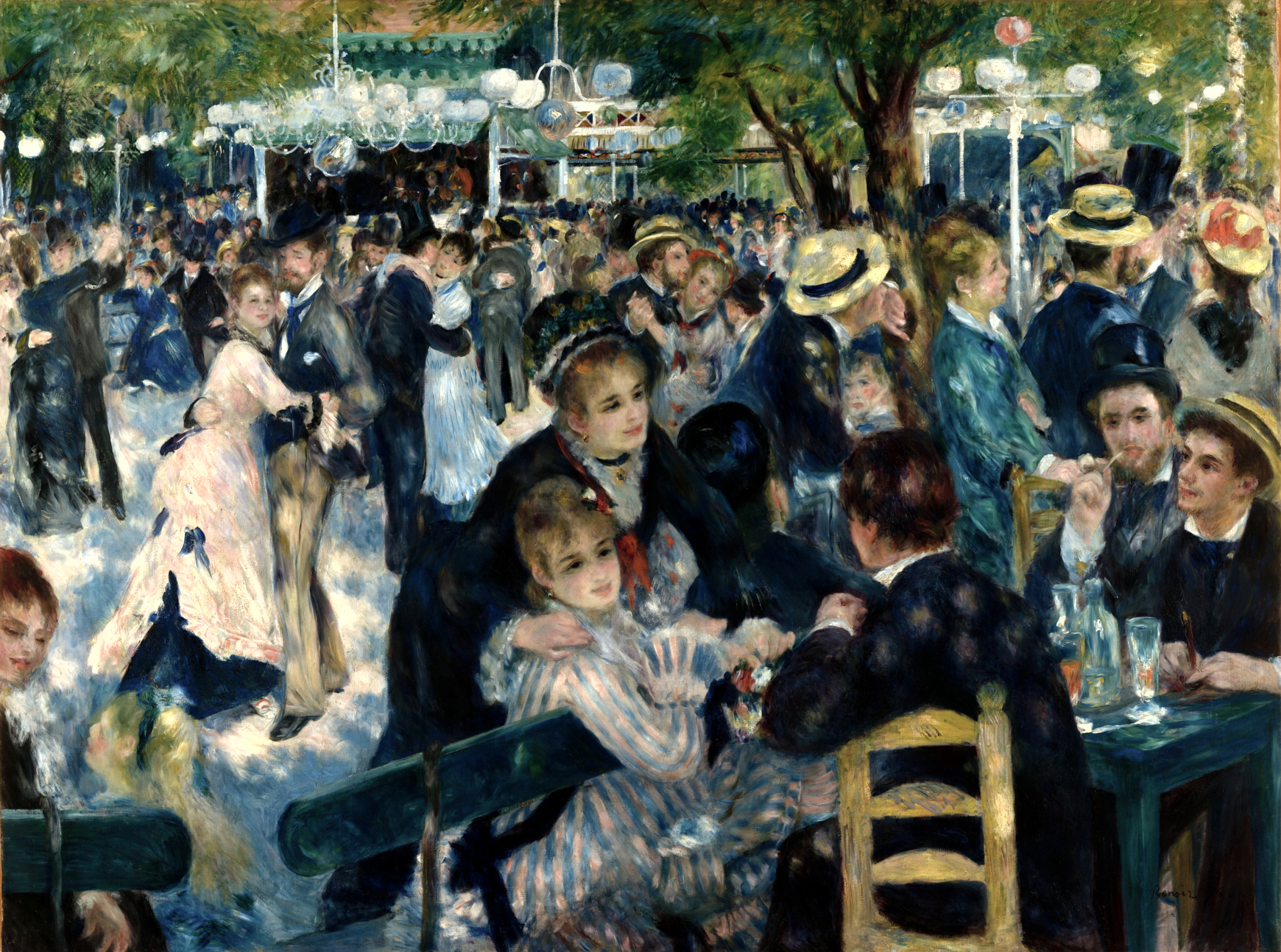
4/ An ekphrastic poem is a poem that vividly describes a painting, such as X.J. Kennedy’s poem “Nude Descending a Staircase”. Try to write your own ekphrastic poem with reference to any one of the paintings shown to you during lectures in the first two weeks. Include an image of the painting in your blog.
The Man from Montmartre
Lily-pad lads and rosewater-coloured ladies.
Lips shifting around the velveteen tongue of the pipe.
Flesh of cream and peach and strawberry.
Timid embraces and demure smiles.
Temptation carved with arched brows and downcast eyes.
“Oh, what a lovely day for a dance!”
Touching her cheek and taking her hand,
wrapping lace gloves in your coat.
Henri stumbled to the table, stealing his chance;
mon bon monsieur’s fille…
the noise and the nerves as he spoke.
But I know you, with your back to our sights,
a weekend dappled with straw hats and Parisian sunlight.
They know so much when they are young and in love.
Leather shoes and parasols strewn upon cobblestone.
The billow of their skirts are the wings of a dove.
Chandeliers draped from the clouds,
and, as their gaze moved about
this bacchanalian shroud,
they glimpsed a man with his day in the crowd.
“What a day to put on display!
Oh, what a day too splendorous and gay.”
With your feet on the edge of the frame,
I’ll wish you had asked me to the dance.
Pummel me back a few decades with paint.
Your fractured shadow when I go home on the train;
you follow me still as I sit alone in the coach.
Your stillness shivers through the brush strokes.
Works Cited
| Renoir, Pierre Auguste. Le Bal du Moulin de la Galette. | |
| Rivière, Georges. Renoir et ses amis. 1921. |
|---|
 Mariama E. Biro Saibou
Hello Mariama,
The poem you have written is absolutely lovely. Despite the painting being rather loud and busy, you were able to capture the beauty of intimacy between individuals. I find this evident towards the end of the second stanza, where the words you have chosen are quite romantic, almost in a bashful sort of way. And I think that ties in with the time period of the painting. The overall tone is very charming, and the imagery is beautiful. Your unique writing style allows me, and anyone reading it, to effortlessly visualise such a sweet poem.
LikeLiked by 1 person
What an amazing Ekphrastic poem! Written with a real sensitivity to details in the painting. Well done!
LikeLike
Hi Mariama,
Thank you for sharing this example of ekphrastic poetry.
Given the texts you referenced I believe you are a Francophone.
Did you take your title from Stephen Longstreet’s novel about Maurice Utrillo? Or perhaps it is a phrase of personal relevance for yourself?
Drawing inspiration from a nineteenth-century Paris visual art piece I think is such an interesting move for an ekphrastic poem that sits in a twentieth-century English literature blog for a subject at a university in Australia in the twenty-first century. Firstly you show that modernist art, through the example of Renoir, expresses a sensitivity to social life, that we continue to find amongst the social connections of Sydney, Australia. French, as a colonial language carries with it the baggage of European conquest, but colonialism has brought a large number people to have a shared lingua franca which might be a good outcome?
The line of your poem: “They know so much when they are young and in love” is quite lyrical, and reflects truth.
I look forward to your writing going places, whether that be through your time on trains, on planes or by walking, but also through your initiative.
Regards,
Joey
LikeLiked by 1 person