
Blog 3 – Critical: Take any literary text and suggest how and why the words of this text continue to have a transformative, illuminating, nurturing LIFE. Is this why we continue to engage with literature? Is literature an antidote to the destructive forces in the world?
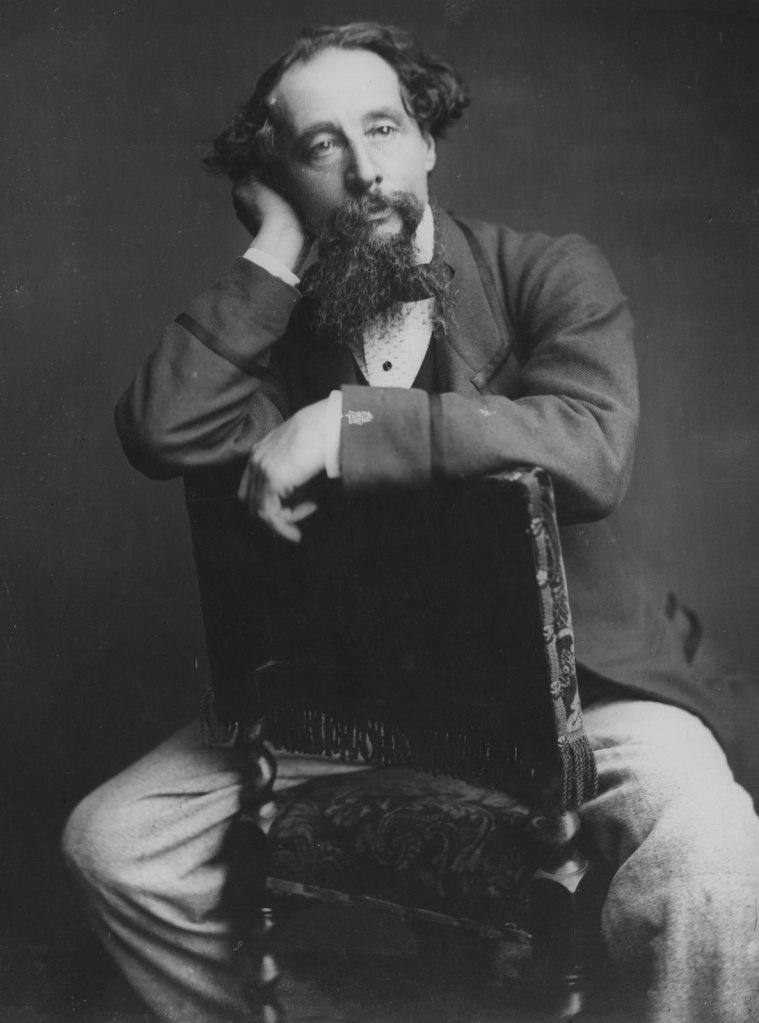
Whenever I ponder the healing and exalting powers of literature, I often consider the works of Charles Dickens. This 19th Century Unit has unearthed for me a plethora of poets, playwrights and authors who were both scathing and enraged by the same sort of superficial drivel that drives much of my own contemporary world. Upon deeper contemplation, Chapter 34 of Dickens’ Great Expectations demonstrates how “transformative, illuminating and nurturing” literature can be by satirically expounding some of the failings of poor, misguided Pip’s egoistic and materialistic lifestyle in London.
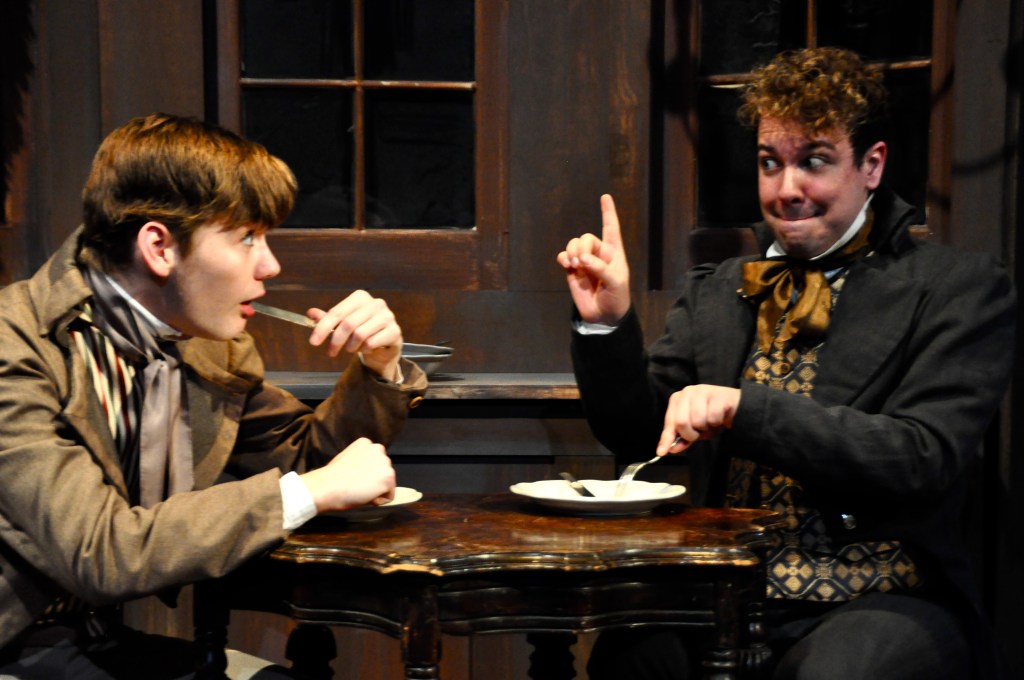
Chapter 34 demonstrates how Dickens artfully utilises cumulative language to fashion the mise-en-scene of mere façade, listing the paraphernalia in Herbert’s workroom: “the ink jar, a hat-peg, a coal-box, a string-box, an almanack, a desk and stool, and a ruler” (Dickens 487). This portrays how the elements of Herbert’s occupation embody the potential for business and productivity. However, this notion is cleanly undercut by the fact that Pip does “not remember that [he] ever saw him do anything else but look about him” (Dickens 487). In essence, the material components of a task (and oftentimes, the task itself – i.e. paying interest on the loan…googling next year’s weather forecast…doing your taxes…) amount to nothing but aimlessly and emptily peering about the contents of one’s own life, and the objects and persons which occupy the office work realm accumulate to a void of nothingness.
It becomes evident Pip and Herbert have been spending so frivolously and do not quite know what to do with their life whilst residing at Barnard’s Inn in London. Perhaps the most illuminating and transformative image is the simple description of a young man who has no sense of purpose or direction of where he is going in life, contemplating his hardworking friend whose work life offers little financial or personal progress. It is an ironic and tongue-in-cheek observation with Pip’s certainty that he “felt that I had brought his affairs into a focus for him” (Dickens 491). Dickens evokes the dysfunctionality of modernity, where we all seem to amass more and more debt to attain priceless nothings. Like many of us, Pip realises in hindsight he is delusional in his understanding of life and Chapter 34 ends with Mrs Joe’s death following Pip’s grandiose attempts to manage his affairs. This symbolises the vicious kick in the teeth from reality, which sadly many people need from life, as well as from literature.

Pip’s hapless, hedonistic existence felt to me a Dickensian mirror held up to the young Sydneysider. It is this ability to wake up the mind of the sleepwalking/sleep-living reader, even from the Victorian ashes of history, that evokes the beguiling quality of literature.
Works Cited
Dickens, Charles. Great Expectations. London: Penguin UK, 2003.
 Mariama E. Biro Saibou