Hi Cameron,
I think it’s safe to say that Patrick White would be beaming from the praise you have voiced for his work. I agree that White indeed leaves readers awestruck by his “story-telling ability”. You clearly have a grasp on White’s skill in creating depth and vividness within the minimalism of both his worlds and words. Recognising that the quote “He had the paprika chicken in his teeth” is a concise, yet emotive description of the disgusting Szabo indicates you understand not only the way in which White crafts his literature, but you can also discern the meaningful complexity shrouded by the simplicity of language. Both an eloquent and succinct letter to Mr White; the kind of writing I imagine he’d enjoy! Well done 😊
My first thought: what an unusual way to begin a critical piece…
Though this is a critical, I really appreciated the fusion
of creative and critical you embedded at the beginning of your blog: “I am standing on
a footbridge made of timber, a boardwalk if you may…beyond that surface, are the ocean’s
gentle waves, conversing with the wind.” That excerpt displays beautiful auditory imagery and it is
wonderful way to set the scene for your reader: to exemplify the “correlation
between literature and art” with your own words.
This imaginative paragraph proves the very point you make in the rest of your blog. Like literature and art, creativity and criticism are often the same thing and must be used interchangeably to evoke an agenda or reveal a perspective to audiences. I very much agree that art facilitates self-actualisation and referencing Miles Franklin and Banksy as authoress and artist both creating pieces in opposition of the status quo was a clever way of evidencing creatives from classical and contemporary Australian periods.
My last thought: what a brilliant way to illustrate the
connection between literature and art!
A profound, analytical interpretation of Nolan’s romanticised ideation pertaining to Ned Kelly. Your acknowledgment of the various perspectives that artists and institutions held about Ned Kelly as either a hero or a criminal appropriately contextualised your description. I found “a brutal collision of a man characterised by his reputation of violence and the peaceful Australian scenery” to be a particularly effective way of communicating the contrast that exists between the beauty of Australia and the obscurity of the Ned Kelly legend. The way you describe Nolan’s portrayal of Ned Kelly as a “cartoon-like image” is also clever, as I’m lead to imagine there’s a whimsical and childlike element to this artwork, embodying the idealistic notion of Ned Kelly as the ‘Australian Legend’, embedded throughout our Australian identity. An articulate, succinct description of “Frist-class Marksman” – interesting and informative blog, Holly!
“River to the right. Pink triangle mansion on the left… at one point, one of mum’s great aunties or uncles owned that house.” – I really enjoy the accumulative imagery in this paragraph; there is also a sense of stream-of-consciousness in this section that is very affective, the notion of sitting in the car passing by these familiar spots, ticking them off the checklist of your fondest memories. Very evocative! ”A place completely entwined in rich memories” – This concluding sentence really embraces the naturalistic imagery employed throughout your entire piece, as I imagine ‘entwined’ with your memories are the branches of ‘towering trees’ and ‘shoreline vegetation’. The emotive language is completely nostalgic and wistful, full of longing and a deep appreciation for Wolli Beach. This makes me want to go there one day, awesome creative!
Author’s Note: Being of African and European descent, I understand how tricky the fusion of cultures can become. I everyday feel blessed that I had parents who came from different parts of the world. I’m glad to know how the dichotomy of humanity can be the most complex and confounding experience for one person.
Reading ‘That Deadman Dance’, a moment in the
book that struck me was when Bobby’s niece and nephew visited. I wondered at
their personal experience as biracial individuals in colonialist Australia.
I was brought back to the memory of meeting my paternal
grandfather in Ghana for the first time when I was very little; there was such
wisdom, joy and melancholy within him all at once. He appreciated that I wanted
to learn about the reality of my people.
This piece is a culmination of the feelings I experienced listening to my grandfather’s spirit in the mythological stories I remember from Ghana. It is an imagining of Bobby’s relatives’ interactions with the Noongar and the English, envisioning how dispossession is perceived by an individual forged of both the coloniser and the indigenous.
“6 years I’ve been in the desert and every night, I dream of the sea they say, ‘home is where you find it.’ will this place ever satisfy me? for I come from the saltwater people we’ve always lived by the sea now I’m out here west of Alice Springs with a wife and a family”
A lonely man on the shoreline, he
sits with the fire and the sea.
The townsfolk say, “Oh, Old Bobby Wabalanginy, yes, he’ll be speaking his stories.”
The townsfolk say, “You’ll find him singing to the wind and the whales.”
The townsfolk say, “That mad, ol’ blackfella who won’t shut his gob.”
My brother and I wave to Uncle
Bobby from the oldest path in this place: the town to the sea.
He waves back. White teeth glisten
against flesh stained with ochre and a frizzy, grey-stroked mane roaring in the
wind. Uncle Bobby beckons us toward the pulsating glow of his campfire.
I run to him barefoot and my
brother scoffs at the sand in his shoes.
Uncle Bobby engulfs us both with weak arms and strong embrace, murmuring Noongar words of welcome into the shells of our ears. As if we are the very shells on this beach, he talks to the saltwater inside ourselves–inside our veins.
Our Papa says, “You and your brother and your mother, you don’t bleed blood. You bleed the ocean and rivers, it’s part of you.”
This Mabarn man smells of the Holy
Trinity: the sea and the land and the man.
Ushered around Uncle Bobby’s campfire, he builds it up hot for us and hums in baritone brooding. My brother mutters about the stench of smoke soaking into his new coat and I close my eyes with the ash colouring my cheeks like a strange rouge.
My brother looks to the town longingly. A girl of flaxen curls and cerulean eyes passes us, holding a parasol to the sun, and the woman beside her looks to Bobby with an inquisitive gaze.
“Governor’s wife,” he says in a faraway voice.
“His daughter, too?” My brother asks.
I turn to Uncle Bobby – his large, black eyes alight in the flames. “Tell me about the whales, Uncle Bobby,” I say with delicate distraction on my smile and he knows I mean to take him from thoughts of the past. He knows I ask him to tell me about the past before the past…a time before time.
Though my brother’s eyes follow the governor’s wife and daughter, Uncle Bobby looks to the ocean and so do I. We watch the waves catch on the sunset, the shadow of spirits leap from crest to crest.
“I see them, Uncle Bobby,” I say and pretend I do not notice the tears fall into the old man’s fire. “I see them.”
4/Write a letter to Meg in “Down at the Dump” telling her what you think about her relationship with Lummy.
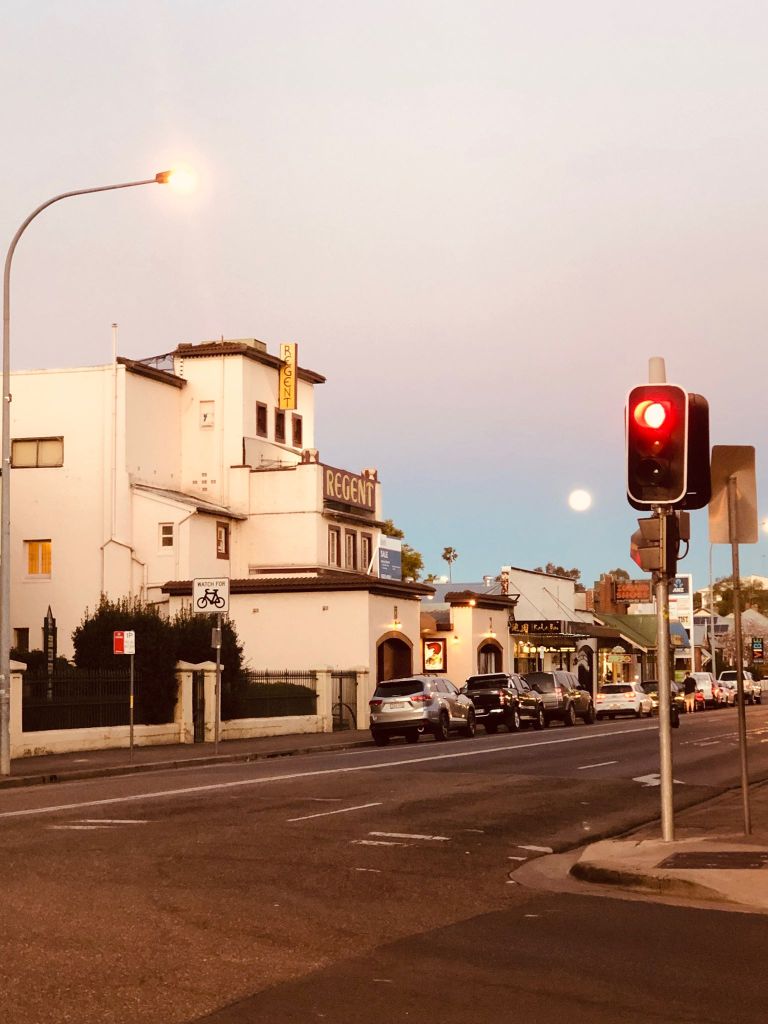
FRONT OF THE POSTCARD TO MEG: I write this letter to you sitting on a bench in the park on an early winter evening. The view from me to you – full moon white yet blue, traffic lights red, the sky is somewhere in between…
Meg,
I’m so sorry to hear about your Aunt Daise.
If the red-hot grief of losing someone who understands you is not hard enough to bear, I couldn’t blame you for mourning the even gloomier, greying knowledge of being surrounded by those who don’t understand you at all. Believe me when I say that I know your feelings, Meg. Losing my own mother was–well, even the words of poets evade me. Realising there was nobody else in the world who would see the world the way we could see the world was more than half the agony.
Just keep shining, Meg. And know you are loved.
Yes, your parents are the incarnate of taupe walls and 4.5-star motels and always carrying a spare pair of flesh-coloured high heels in the boot of the second-hand Jag (the colour of ‘flesh’ always being white, of course). However, I’m sure they do love you with brightest beige they can muster. It’s simply a sad fact that you love in kaleidoscopic shades transcending the human eye.
And you were – and still are – loved by Daise with the same otherworldly passion you have.
And loved by Lum, it seems. Your last letter said as much.
Even your love for Lum outstretches Daise’s love for that fine, though pitiable Mr. Cunningham. Lum, too, is quite fine (picture me now, friend, winking at you and nudging you in the ribs with a tickled elbow and suggestive smirk). You see that Lum can defy pity, just as Mr. Cunningham could not. Lum asks for none of our sorrow; he’s a proud, poor, unpitiable boy. And maybe that is the solid shade of faithful rigidity you deserve: the blackness in the finite, in the bitchumen roads he’ll travel. Not Hogben beige, but rather a Lum-like absence of colour (or his desire for that absence) to balance even half the light you emit.
I can picture your cherry blossom cheeks and hidden smile at
reading these very sentiments.
And you’d be right to hide that smile, Meg. Perhaps for only a few years more…perhaps for a lifetime. Keep your blushes and your smiles for Lum in the crevasses of your soul. Daise didn’t have those crevasses I believe; she couldn’t contain that luminosity in the ravines of her spirit. Whether it was because her compassion held no penchant for secrecy or because she felt true light shouldn’t be quietened, she didn’t have the capacity for protection. She only knew exhibition of that precious, unchiselled jewel underneath her skin.
But you know, Meg. You know how to protect what must be protected.
Because it isn’t the night-black certainty of Lum’s unwayward path to the semi that concerns me. Rather, it’s others’ “concern” that concerns me. We both know the folks of Sarsaparilla, Meg. We both know the affronted stares and the utterances under the breath. If you’re not concerned for you, be concerned for the both of you: the unity of you and Lum. That’s what makes people look twice. That’s what made folks look twice at my parents. Same as you and Lum: the white and the black and the world in between. The world’s what drove them apart, too, eventually.
Don’t misunderstand me, Meg. I am so happy you have found Lum. He’s your match in more ways than none. But this world can be cruel. And you’re both so young. You’re strong and clever enough to understand that. Give yourself time in the cool shade of this boy. He’s so eager to escape this place that all he’s got now is the right one on whom to wait: you.
CRITICAL: Write a brief (illustrated) summary of what you learnt in the gallery yesterday and/or focussing on the one or two works that you found most challenging or interesting.
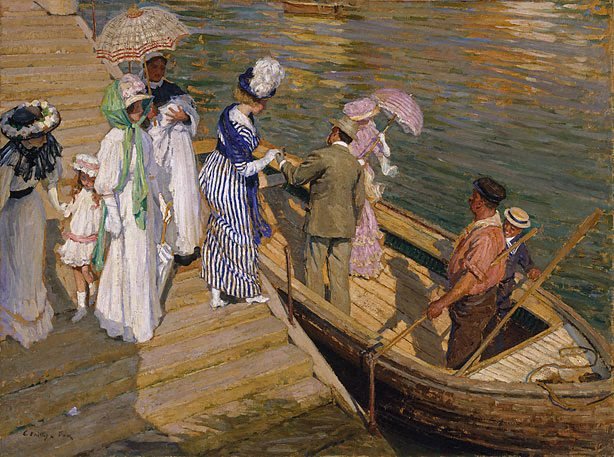
The Ferry by E. Phillips Fox
What I felt encompassed my learning experience at the New South Wales Art Gallery was the notion of evolution; the quantitative sensation of time moving passed me as I ventured from artwork to artwork. I felt I was watching the Australian identity mould and manifest itself: a process facilitated by both internal and external artistic and cultural influences, such as the impressionistic aspects of French modernism in the painting by E. Phillips Fox: “The Ferry”.
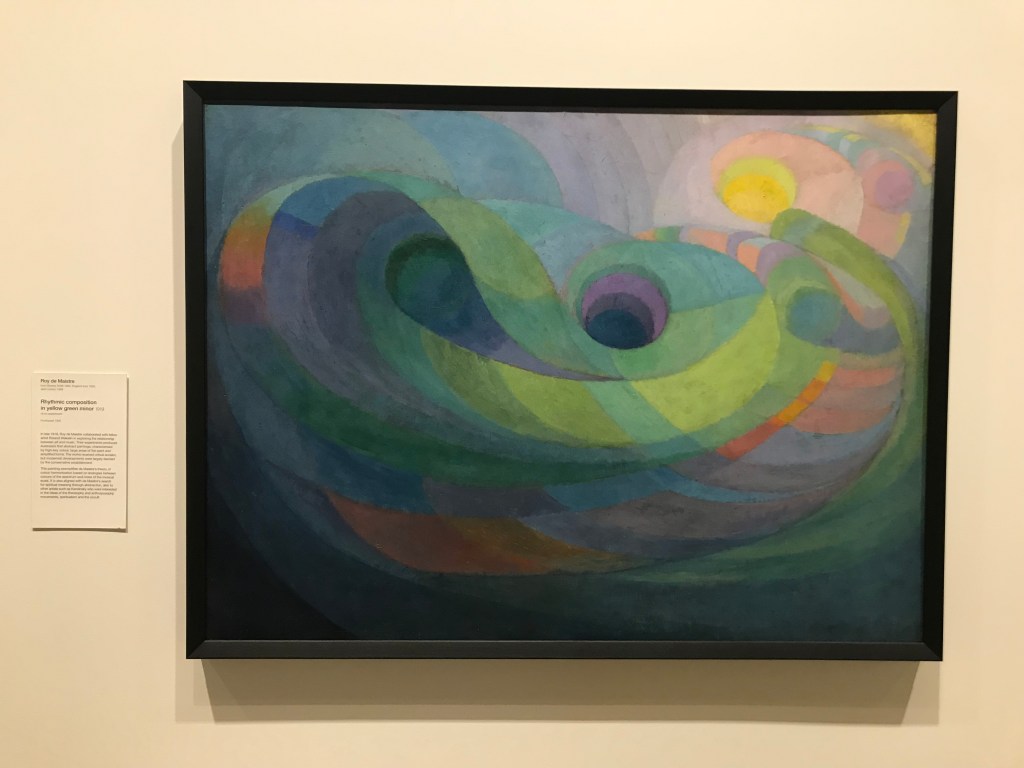
Rhythmic composition in yellow green minor (1919) by Roy de Maistre
From my perspective, Green Minor represented a visualised
journey. My tutor, Michael, explained this artform may have been consequent to
the shellshock experienced by Australian soldiers in World War I. The circular
movement of the painting indeed felt as though I were being shuttled from a
dark abyss to warm hope. It appears to me almost a slippery-dip of emotion,
tunnelling from dark shades of violet and indigo, hurtling toward an oval of
lime green and canary yellow. Amongst it all is a hazy green neutrality. The rhythm
and motion of this painting cannot be denied, and I wondered at the artist’s
ability to see music in colours.
Golden Splendour of the Bush by W. Lister Lister
The first artwork I found most engaging was the ‘Golden Splendour of the Bush’ by W. Lister Lister. There is a glaze of golden-pink colour over the entire artwork, as if stepping into a moment that is the sunset in the outback. The native gumtree stands erect, proud and magisterial. It looms over the viewer with its thick, winding branches outstretched, readied for the viewer’s embrace. Whilst there is a realism that saturates the elements of this piece, there is also an ethereality. This glimpse of untouched, paradisal calm is an illustrated ode to the Australian landscape. And perhaps, from a contemporary perspective such as my own, it is now a requiem for nature–for the timeless beauty of the bush we sometimes cannot perceive.
Henry Kendall’s “Bell-birds” leaves my imagination adrift in a quiet, peaceful greenspace.
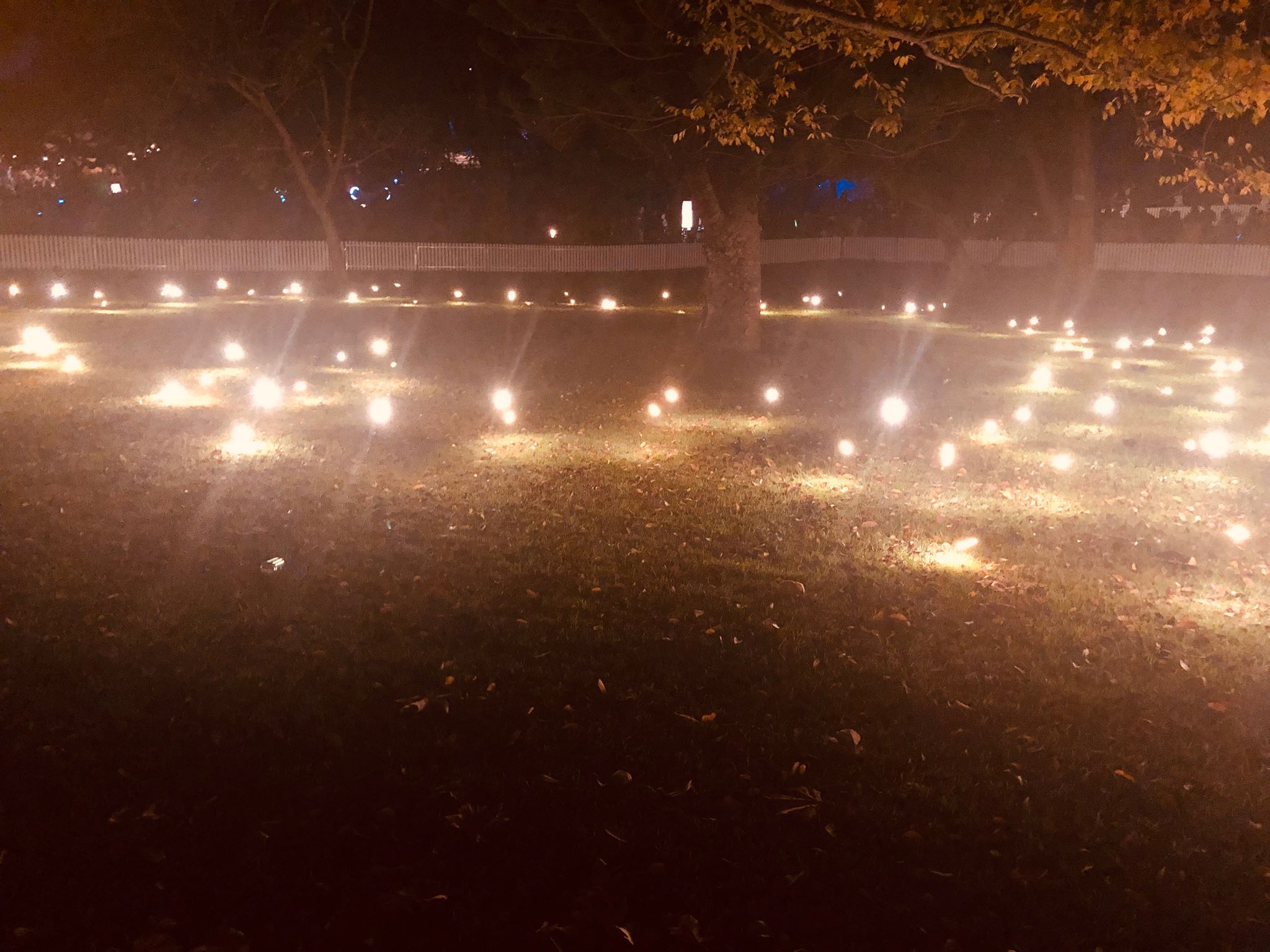
“THROUGH BREAKS OF THE CEDAR AND SYCAMORE BOWERS STRUGGLES THE LIGHT THAT IS LOVE TO THE FLOWERS.” – KENDALL, 1869 150 years later: 2019, Vivid Light Festival – The Royal Botanic Gardens. I felt there was a magic in this photograph, the same magic that was woven into ‘Bell-birds’ a century and a half ago…
Blog 1 – Question: Which poem or story that we have looked at so far made an impression on you? What was the impression it made? Why did it touch your feelings and imagination?
Henry Kendall’s “Bell-birds” leaves my imagination
adrift in a quiet, peaceful greenspace. In a world frazzled by the fastidious tick
and buzz of the technological era, there permeates a sibilant magic and salient
musicality throughout Kendall’s poem that resonates with my own love for the
natural realm. The melodic use of rhyme and alliteration throughout the poem compels
my imagination to walk with Henry Kendall through a land “Where dripping rocks
gleam and the leafy pools glisten”. Kendall kindles within me a sense of deep
respect and admiration for the vast, rare terrain that is the Australian landscape.
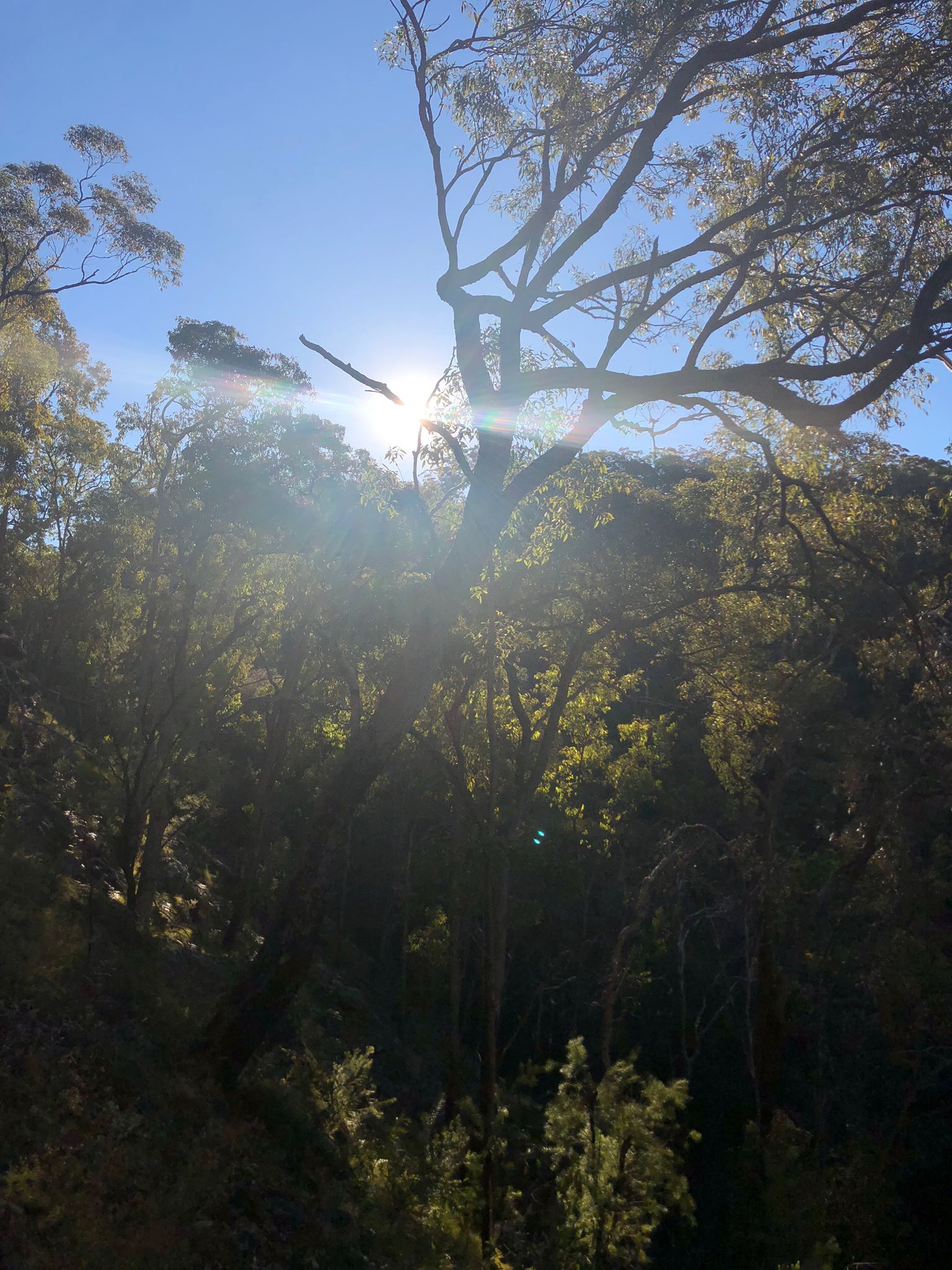
Elizabeth Lookout, a place I often go exploring near my home in the Mountains. Here, I listen to the call of the bellbird.
I especially felt a likeness to the last lines of the last
stanza: “So I might keep in the city and alleys, the beauty and strength
of the deep mountain valleys.” There is a contrast and similarity between “alleys”
and “valleys”, as I initially perceived a shared imagery in the shade and
darkness of both locations. In “alleys”, the implication of sinisterness prowling
the city is evoked, yet I feel that “mountain valleys” are comparably cavernous
and sacred, holding within “cool wildernesses”.
Gould, John. Crested Bell-Bird. 1848, Australian Museum, Sydney, Australia.
What left the keenest impression on me, however, was my notion that the choice of the native bellbird for Kendall’s poem was a deliberate metaphor for Australia itself. Through a bird with the appearance of grey drabness, Kendall embodies the “heart-beats of passion” that course through the Australian heartland. Historically, both Australia’s bushland and mountain ranges were perceived as an obscure, looming, unimpressive form that manifested itself as an extremely unattractive alternative to the temperate quaintness of England. The mediocre bellbird can be perceived equally as unattractive as the motherland through which it roams. However, when we hear the bellbird’s tuneful tolling, the revelation of this animal’s profound beauty is the metaphor in this poem. Kendall is professing to actively recognise the harmonious charm of Australia, for to listen to the dull bellbird’s beautiful songs is to understand the exquisite complexity of the Australian landscape. Thusly, I feel we can comprehend and perhaps even mourn the loss of the “sights and sounds of the wildwood”.
Glenbrook Lookout: the call of nature…
“Bell-birds” is a lulling poem, both lullaby and siren-song to the senses of suburban students such as myself, who I believe often yearn for the trilling call of nature to satiate a strange void we feel in the name of living ‘city folk’ lives. It is this very call–this reminiscent, yet ravishing song–of the bellbird that Kendall describes which touches the “softer than slumber” part of my soul.






 Mariama E. Biro Saibou