
2/ Near the end of Eliot’s “The Waste Land” he writes “These fragments I have shored against my ruin”. In the spirit of Eliot’s vision of the world, write a poem or a short prose passage that uses this line as its opening.
How I Have Grown Into My Ruin
These fragments I have shored against my ruins…
forgive me, sir, but that won’t be this story’s first line.
“Oh, world of ours!” A slither of breath from standing aligned,
but something divides us with the deceptively sublime.
I wonder if they still listen as I raise my eyes.
Distance and space and tears and heaven and time.
So far down…down…so deep above the stars below.
Wisteria upon the window,
it whispers to rest when my mind turns to fright.
maybe–maybe–maybe Eliot is right.
Like Titania from the fable,
she stirs cocoa into the milk.
Saturday night: baking for one at her two-chair table.
The tower and its lady, white-washed,
with warm, pale hands and a lonesome curse.
So she escaped her little, cosy spire in the suburbs.
She left her mum and her dad and her job as a nurse.
She followed the thrum of drums and the scent of the sun.
A gentle man with clean, dark hands; he was the one.
but now she sleeps…
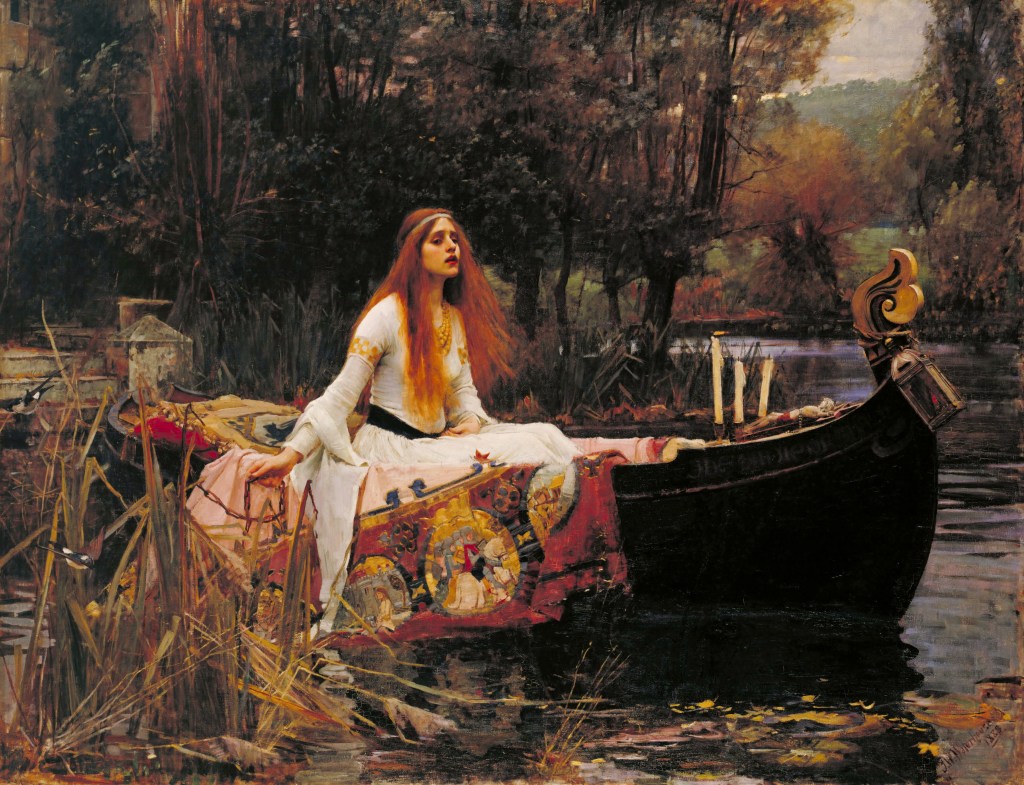
like the Lady of Shalott looking at Lancelot,
or Peter and Wendy, love stories long lost.
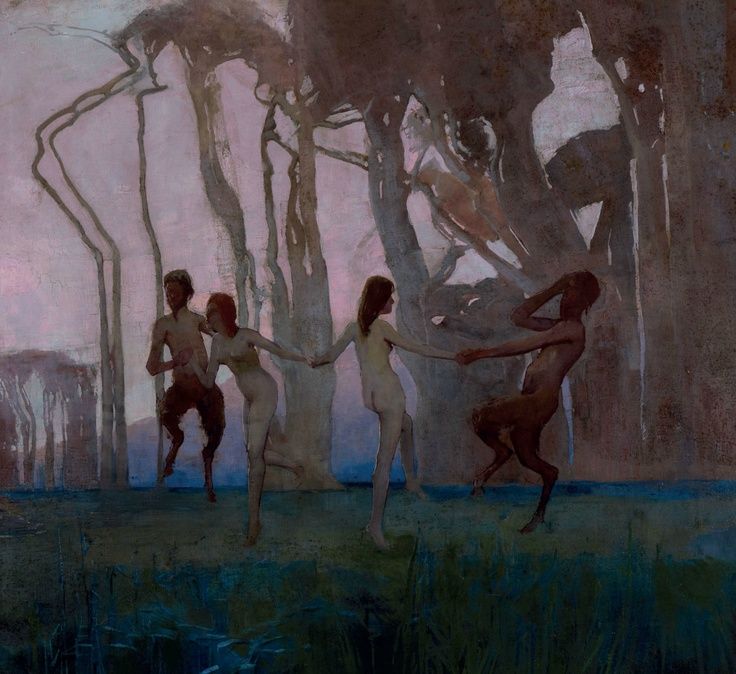
When dark hands hang Sydney Long’s Pan,
I can still see them dance!
Pressed flush against the plush sajjāda, forehead and hands.
I used to think he was praising Pan on the wall,
in the living room. Five times to Him he would call,
to the Spirit of the Land? But…
“No,” those hands murmur gently,
entwined with the bone shackles of prayer beads;
Misbaha cuffs and those clean, dark hands.
“Not the painting. I face Allah’s homeland.”
On the bookshelf, Quran and Holy Bible lived side by side.
They leaned against each other, bound by leather and life,
next to Peter and Wendy, and recipes for a pork-free wife.
(No more gelatine for the cake.)
“Before sleep, say thank you to Allah and Christ;
pray for the uncles and aunties in Daddy’s tribe.”
(She missed bacon.)
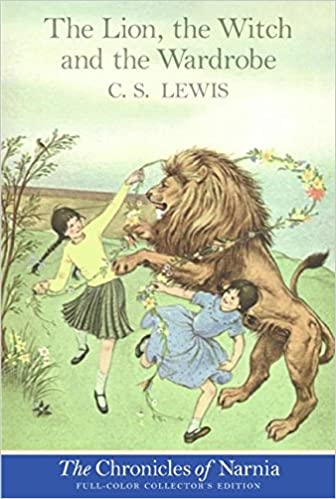
“On safari, yes, they are protected by C.S. Lewis’ lion.”
Incense and the song of spellcasting languages at night.
So, you owe me answers, you two-faced faith,
and reasons for good souls denied the same good place.
All dead, will it be as it was when I was a child?
Can I ask Christ about parental visitation rights?
Can Dad’s Prophet come over from Jannah on weekends?
You’d better find a way to sew together your kingdoms.
So, let’s broker custody over heaven.
Take off your halo and sit down for tea.
Bring your son; he can play with your spirit
in the park across the street.
Tell me about Mecca in that print of Pan,
and explain the oasis in that bloodied Red Sea.
Ask Moses to part the waters once more;
I want to see Wendy and Peter, please.
These fragments I have shored against my ruins…
“My, my, how you’ve grown.”
How I have grown into my ruin.
“Oh, dear, glass smashed on the floor of the kitchen.”
A shard forever in the toe,
and the skin around the glass will grow.
Lancelot gifts the mirror to Guinevere after the Lady of Shalott dies.
maybe–maybe–maybe Eliot is right.

Works Cited
Barrie, James Matthew, and Mabel Lucie Attwell. “Peter Pan and Wendy (1921).” Pavilion Books (1988).
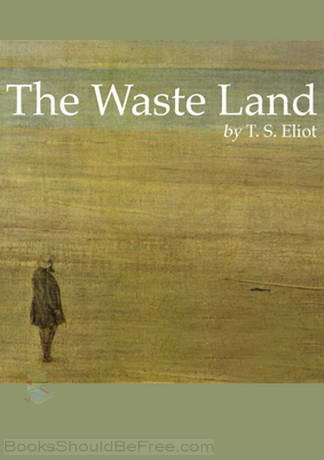
Eliot, Thomas Stearns. The waste land and other poems. Broadview Press, 2010.
Lewis, Clive Staples. The Lion, the Witch and the Wardrobe. Zondervan, 2005.
Long, Sydney, and Anne Gray. Sydney Long: The Spirit of the Land. National Gallery of Australia, 2012.
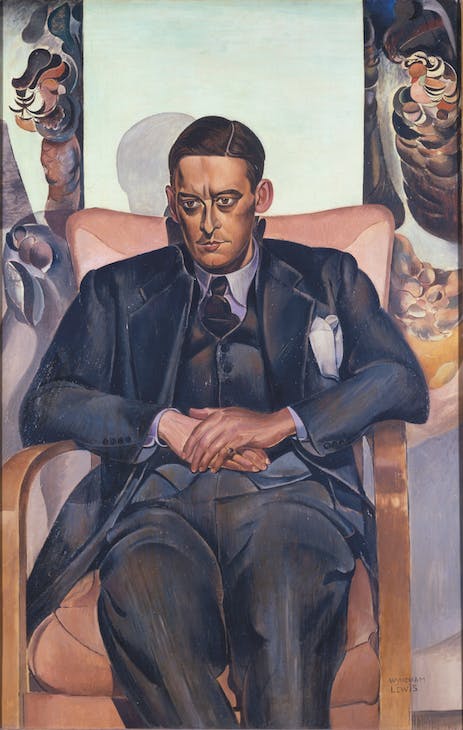
T. S. Eliot (1938), Percy Wyndham Lewis. Durban Art Gallery. The Wyndham Lewis Memorial Trust/Bridgeman Image
Waterhouse, John William. “The lady of shalott.” (1888).
Author’s Note: This is probably the most personal and stream of consciousness poem I have written in quite a while, so it is nice to be sharing it with others for a change. The spirituality and collagelike fragmentation of Eliot’s ‘The Waste Land’ made me revisit the early literary, mythological, spiritual, and religious stages and aspects of my own life.
I felt as though I was replying to Eliot’s vision of the world with, literally, my world. My world fused of Islam and Christianity, of African and European ancestry–bound together and torn apart and stitched together and unpicked again; living is such a cyclical experience for so many people.
It was incredibly cathartic to write this piece and, though it may draw away from addressing Eliot’s modernist world, it was nice to capture my own realm in words through inspiration in ‘The Waste Land’.
 Mariama E. Biro Saibou
well done to address the elephant in the room… your lounge-room. Does it make you wonder, if two people can overcome their religious differences, then why can’t countries compromise and do the same? The difference is love I guess. Your home was filled with it, in whatever shape it may have come, where as nations who fight, are not really fighting about religion, but about greed… who has what, which can be taken from them is more important than love and religion in the eyes of the world.
LikeLiked by 1 person
Hi Dave,
Thank you for this profound feedback! I absolutely agree that “all you need is love” (cheers John and Paul) when two people hail from such opposite sides of the world and life. Sadly, the cultural, religious and political differences between my parents (obviously the pair in this poem) was something they could not overcome. They were forced apart and my mother passed before my father could try to mend what had been broken. But, in a way, especially as I get older, their love story and its tragic end brings to life their magical humanity, as if they’re figments of a beautiful fiction, rather than melancholy in my memory. 🙂
LikeLike